What makes cargo out of gauge
Dimensions, weight or shape that do not fit standard equipment.
- Width, height or length beyond the limits of a closed container
- Concentrated weight requiring load-distribution and lashing calculations
- Indivisible cargo such as transformers and generators
- Industrial project modules shipped in sequence
Equipment and modes used
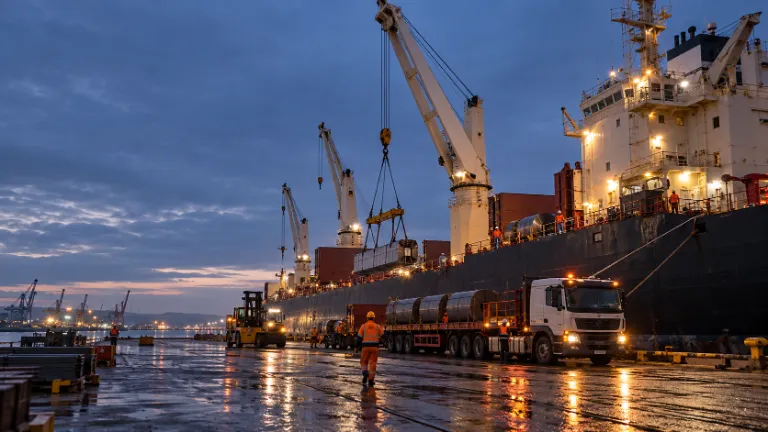
Flat rack, open top, break bulk and special road transport.
At sea, the choice between flat rack, open top or break bulk depends on dimensions and weight. On land, oversized cargo requires special trailers, route surveys and permits from traffic authorities.
Planning is what reduces risk
In project cargo, most of the risk is handled before loading.
Technical survey, drawings, lifting points, route inspection, port window and loading sequence are defined before the operation. This avoids waiting costs, rescheduling and damage.
How it works
- Technical surveyDrawings, dimensions, weight and centre of gravity.
- Route studyEquipment choice and route inspection.
- PermitsTraffic and port permits and authorizations.
- ExecutionLifting, loading and supervised transport.
- DeliveryUnloading at destination according to plan.
Typical use cases
- Transformers and power equipment
- Machinery and industrial lines
- Steel structures and modules
- Oil and gas equipment
Points to check
- Drawings with dimensions and centre of gravity
- Defined lifting and lashing points
- Route restrictions (bridges, overpasses, power lines)
- Insurance suited to cargo value and risk